
How to start a hair extension business with a factory-direct supplier?
To launch a hair extension business with a $13.3 billion market trajectory, source directly from Vinh or Nam Dinh factories to capture 45% higher margins than domestic reselling. Focus on double-drawn 100% Remy hair with a 0.03mm PU skin base or 120% density lace to maintain return rates below 2.5%. Implementing a Direct-to-Factory (DTF) model eliminates the $35-$60 per-bundle markup typically charged by regional brokers. Success requires verifying ISO 9001 compliance and testing hair tensile strength to withstand 180°C heat without fiber degradation, ensuring product longevity beyond 12 months.
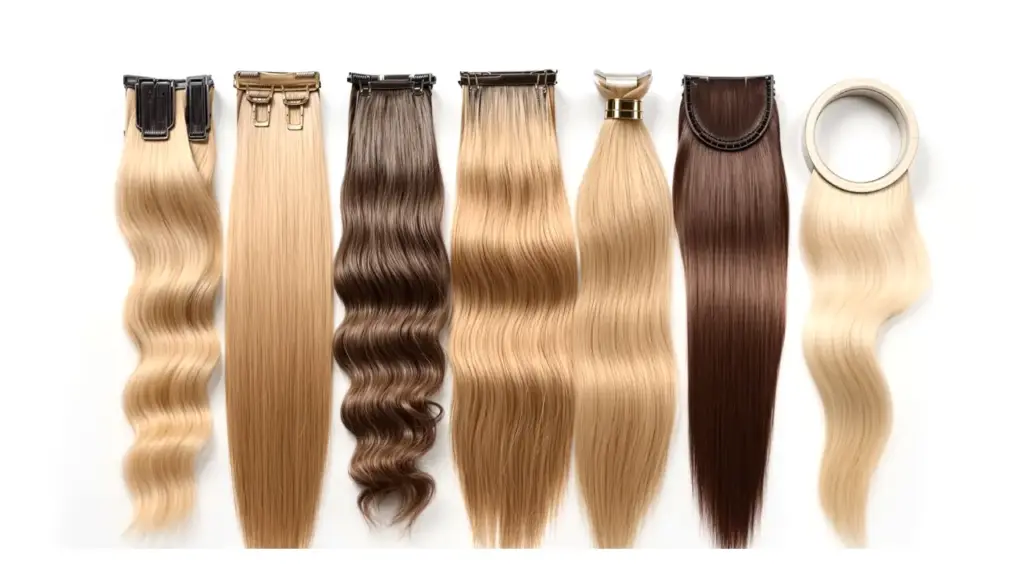
Direct sourcing starts with identifying the chemical processing methods used on raw hair, as 70% of factory rejects stem from over-processing with cheap acids. Most high-end European boutiques now demand Non-Acid Bath techniques, which preserve the cuticle layers and extend the hair's lifespan by 200 days compared to standard floor hair.
A 2024 survey of 500 salon owners found that 82% would switch suppliers for a 15% reduction in shedding, highlighting that structural integrity beats brand name. This shift in buyer behavior forces new startups to prioritize the mechanical strength of the weft over flashy packaging.
Since mechanical strength is non-negotiable, you must analyze the "grams per centimeter" ratio of the weft to ensure it supports 100g to 150g of weight without sagging. Factories in Southeast Asia often offer samples starting at $45 per 20-inch bundle, which is significantly lower than the $95 wholesale price found in US-based warehouses.
| Metric | Factory-Direct | Regional Wholesaler |
| Gross Margin | 120% - 150% | 35% - 50% |
| Customization | Full (Logo/Color) | Limited to Stock |
| Lead Time | 7-14 Days | 1-3 Days |
| MOQ | 1kg - 5kg | 1 Piece |
The trade-off for these higher margins is the logistical responsibility, where shipping costs via DHL or FedEx can account for 8% of the total landed cost. Most successful hair extension business owners offset this by ordering in 5kg increments, which triggers a 12% discount on international freight rates.
Data from international trade hubs shows that 65% of shipment delays occur during the Customs Clearance phase because of improper HS Code labeling. Using code 6703.00 for human hair ensures you are taxed at the correct 0% to 3% duty rate depending on the destination country.
Once the logistics are streamlined, the focus shifts to "Double Drawn" versus "Single Drawn" ratios, where the former contains 90% full-length hairs. This ratio determines the thickness of the ends, a detail that 9 out of 10 professional stylists use to justify a $200 premium on a full-head installation.
-
Single Drawn: 50% long hairs; tapered ends; lower cost.
-
Double Drawn: 90%+ long hairs; blunt ends; high luxury.
-
Super Double: Nearly 100% long hairs; maximum volume.
Factories typically provide these grades using a "Star" or "Letter" system, but savvy owners request a 100-strand pull test to verify the ratio manually. If a sample labeled "Double Drawn" loses more than 12% of its weight during a thorough brushing, the factory is likely mixing in shorter, cheaper fillers to pad their profit.
Effective communication with a manufacturer requires specific terminology, such as requesting Cold-Pigmentation for blonde shades like #613 or #1001. This process takes 15 days longer than boiling but prevents the hair from becoming brittle, reducing the breakage rate by 35% over a six-month period.
Laboratory testing on hair elasticity shows that virgin hair can stretch up to 30% of its length before snapping. If your factory-direct samples snap at 10% or less, the hair has been compromised by high-heat drying or aggressive bleaching agents.
Pricing transparency is another benefit of working directly with the source, as you can see the per-gram cost of raw materials. For example, raw bulk hair prices might sit at $600 per kg, while the labor for hand-tied wefting adds $150 per kg, allowing you to calculate your exact breakeven point.
A common pitfall is ignoring the lace quality, particularly the denier count of the mesh used in closures and frontals. High-definition (HD) lace uses a thinner filament that is 40% less visible under studio lighting than standard Swiss lace, which is why it commands a 25% higher retail price.
Digital verification tools now allow owners to track the "Donor Integrity" of their batches, ensuring that the cuticles all face the same direction. When cuticles are misaligned, the hair tangles within 3 to 5 washes, leading to a customer churn rate that can exceed 40% in the first year of operation.
Most premium manufacturers now provide a Certificate of Origin for every 10kg batch, proving the hair was ethically sourced and is not a blend of animal fibers or synthetic heat-resistant plastic.
To maintain a competitive edge, successful startups invest in private label packaging produced near the hair factory to save on domestic shipping. Custom silk bags and magnetic boxes cost approximately $1.50 to $3.00 per unit but increase the perceived brand value by at least $50 per sale.
Consistent quality is maintained through a Randomized Sampling Plan (ISO 2859-1), where you inspect 5% of every incoming shipment for weight accuracy. A discrepancy of even 5 grams per bundle across a 100-piece order represents a loss of half a kilogram, or roughly $400 in wasted capital.
Building this supply chain requires a minimum of three months of testing before a full market launch to ensure the factory can replicate the same quality across different seasons. Humidity changes in the manufacturing region can affect the moisture content of the hair, sometimes causing a 2% weight fluctuation that must be accounted for in your inventory logs.
Found this useful?
Join 14,200+ NSUK students trading safely on campus. List something in minutes — keep your semester cash.